















Law Firm Marketing – Website Design, SEO and AI Search Optimization
If you are looking for a practical, proven law firm marketing agency that turns online visibility into qualified consultations, you are in the right place. At MileMark, we build growth systems for firms of every size by combining brand strategy, conversion-focused website design, law firm SEO, paid search and AI search optimization across Google, Bing, ChatGPT, Gemini, Perplexity, Claude and other generative search platforms.
MileMark is a national digital marketing agency for law firms, specializing exclusively in lawyer and attorney marketing. For over a decade, our team has helped attorneys and law firms build powerful digital presences that attract clients and strengthen credibility. We design professional law firm websites, implement advanced legal SEO strategies, manage paid advertising, and improve firm visibility in AI-generated search results. Every campaign is tailored to your firm’s goals, practice areas, target markets and competitive environment. Our experience spans solo practitioners, boutique firms and large multi-office practices across the country.
Contact the MileMark team today for a complimentary website audit and consultation. We will put 80+ years of combined legal marketing experience to work for your firm.
Message Us or Book an Appointment | Call 866-598-6235
Who Is MileMark?
MileMark is one of the nation’s premier digital marketing agencies for law firms, a position supported by six consecutive years on the Inc. 5000 list of fastest-growing companies from 2018 through 2023, Awwwards recognition for web design, and coverage in Yahoo Finance, Business Insider, National Law Review, AP News, Apple News, and CEO Weekly. Our agency works exclusively with law firms.
Eighty years of combined legal marketing experience across the MileMark team means we know how legal intake works. Our leadership team’s background includes senior roles at Martindale-Hubbell and LexisNexis, which provides direct familiarity with how legal directory data, attorney rating systems, and buyer behavior have been structured and monetized for decades. That history informs how MileMark builds entity identity for its clients, because the people who built the system understand its architecture.
Our agency builds its own technology rather than licensing third-party platforms and reselling access. MileMark also hosts the Law Firm Marketing Advantage podcast and YouTube series, which functions as both a resource for firm owners and a demonstration of the agency’s depth on the subjects it covers.
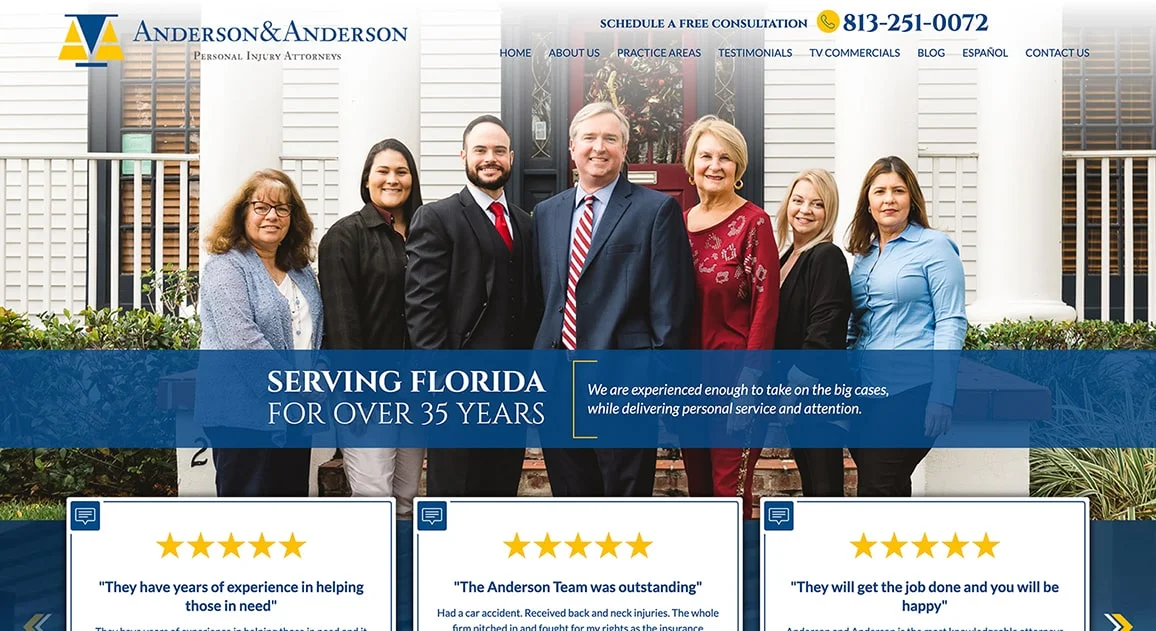
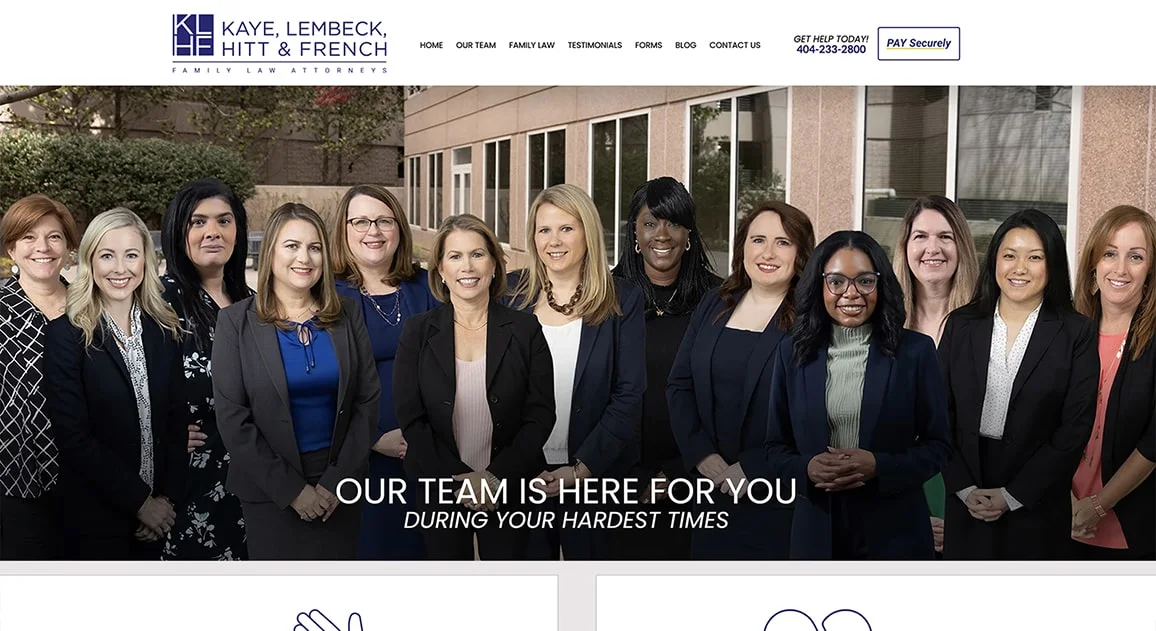
We have built thousands of custom law firm websites, each designed around the specific practice areas, markets, and competitive positioning of the individual firm, reflect an approach that treats every engagement as a custom build rather than a template deployment. We offer a free website audit and consultation as the entry point to every engagement, and the findings belong to the firm regardless of whether it hires MileMark.
Law Firm Digital Marketing Services
MileMark is a national digital marketing agency that works exclusively with attorneys and law firms. We provide law firm and attorney website design, search engine optimization, local SEO, Google Ads management, Local Services Ads and AI search visibility services. We serve solo practitioners, growing firms entering new markets and established multi-office practices across the United States.
Firms come to us for one of four reasons. Their website looks dated or converts poorly. Their organic rankings have stalled or declined. Their firm does not appear when prospective clients ask AI tools for a recommendation. Or they are spending on paid search without knowing which campaigns produce qualified leads and signed clients.
Every engagement begins with an audit, not a predetermined sales package. We review your website, technical health, organic search visibility, local presence, review profile, paid advertising and how major AI systems currently describe your firm. Then we tell you what is limiting growth and what it will take to fix it. You keep the findings whether or not you hire us.
Marketing a Law Firm Is Not Like Marketing Anything Else
People searching for an attorney are rarely comparison shopping in a calm frame of mind. They are facing an injury, a criminal charge, a divorce, a financial crisis, an employment dispute or the death of a family member. They are deciding whom to trust with a problem that affects their freedom, family, finances or future. That changes what your website must communicate and how quickly it must establish confidence.
Law firms also market within one of the most heavily regulated professional environments in the country. Messaging has to account for state bar advertising rules involving claims, disclaimers, testimonials, case results, specialization language, jurisdictional limits, confidentiality and professional responsibility.
We work exclusively with attorneys and law firms, so you do not need to explain why a criminal defense lead behaves differently from a commercial litigation prospect, why intake speed matters in personal injury or why estate planning requires a different message than high-stakes litigation. We begin with that understanding rather than learning the legal industry on your budget.
Choose Where You Want to Start
Most firms do not need to replace every part of their marketing program at once. They need to identify and correct the specific issue currently limiting growth. Below are the four programs MileMark runs, each with its own strategy, deliverables and performance measurements.
Law Firm Website Design
Your website is the first substantive interaction most prospective clients have with your firm, and it often decides whether they call you or return to the search results. A site that loads slowly, hides its calls to action, performs poorly on mobile or reads like a legal brief quietly loses cases every week.
Effective law firm website design is not simply about appearance. Branding, page structure, navigation, proof, content, mobile experience and calls to action all have to work together to establish trust and generate consultations.
A high-performing law firm website answers six questions fast: Does this firm handle my type of case? Does it serve my location? Can I trust these attorneys? Has the firm helped people in situations like mine? What should I do next? How quickly can I speak with someone? We structure every page so those answers are immediate rather than buried.
Proof carries the persuasion. Attorney experience, case results, reviews, credentials, media recognition, awards and community involvement all build confidence, but the goal is never to stack every credential onto every page. It is to place the right evidence at the exact point where a prospective client decides whether to contact your firm.
Our attorney website design process is mobile-first, because urgent legal searches happen on phones. Navigation, forms and calls to action are built for small screens from the beginning rather than compressed down from a desktop layout. Depending on your practice, that may mean click-to-call, tap-to-text, sticky contact buttons, short forms, online scheduling or chat.
Technical performance is part of the design process, not a later addition. We build for Core Web Vitals using clean code, optimized media, logical URL structures, clear heading hierarchies, internal linking and appropriate schema markup. A website that search engines and AI systems cannot efficiently crawl and understand is a liability regardless of how attractive it looks.
Your site should also reflect the firm you actually are. A boutique family law practice should not look or sound like a national mass tort operation. A trial-focused personal injury firm should not use the same messaging as an estate planning practice. We build a visual and verbal identity around your attorneys, your clients and the market position you want.
Common starting points: full redesign, new law firm website, platform migration, conversion optimization, speed and Core Web Vitals remediation, accessibility improvements, content restructuring.
Explore Law Firm and Attorney Website Design
Law Firm SEO
Search engine optimization is the marketing channel that compounds. Paid advertising stops producing visibility the moment funding stops. A well-built organic program keeps generating qualified opportunities as its content, authority and market relevance grow, which is why it remains the highest-return investment for firms that intend to stay in their market.
When someone searches for an attorney, you are competing against established practices, national directories, lead generation sites, paid ads, Local Services Ads, map results and AI-generated summaries on the same screen. A law firm SEO strategy that addresses only traditional organic listings is addressing a fraction of the page. Our SEO for lawyers focuses on the practice areas, geographic markets and case types that create business value. Legal SEO should produce more than traffic, impressions and rankings. It should attract prospective clients your firm is actually prepared to help.
- Technical foundations come first. Crawlability, site architecture, index management, page speed, mobile usability, redirect and migration planning, canonicalization, duplicate content analysis, internal linking and schema. If search engines cannot efficiently access and understand your site, nothing downstream reaches its potential.
- On-page optimization gives each page one clear purpose. Practice areas, services and locations are assigned deliberately so multiple pages do not compete for the same query. Most law firm sites we audit are cannibalizing themselves, with three or four pages half-targeting the same term and none of them ranking. Correcting that, improving internal links and clarifying page intent frequently produces movement before a single new page is published.
- Content structure follows the same discipline. A firm should not rely on one general services page to rank for every matter it handles, but publishing hundreds of thin, near-identical pages weakens a site rather than strengthening it. We build focused practice area hubs supported by genuinely useful subpages, FAQs and legal guides.
For a personal injury firm, that might mean distinct coverage of vehicle collisions, truck accidents, wrongful death and premises liability. For a family law practice, divorce, child custody, support, property division, high-asset matters and post-judgment disputes. Each page serves a specific search purpose while contributing to the authority of the section around it.
Ongoing content and blogging support that structure rather than existing alongside it. Legal guides, FAQs and firm news reinforce topical depth and keep the site active, and we distribute that work across your social channels so the same effort builds visibility in more than one place.
Local SEO is where the highest-intent legal searches concentrate. Prospective clients search by city, county, neighborhood and court, then compare map results, office information, reviews and websites before deciding whom to contact. Our local work includes Google Business Profile optimization, category and service selection, business information consistency, review strategy, local citations, location page development and map visibility monitoring.
We will not build a page for every city in a state simply because a firm wants to rank everywhere. Geographic pages need meaningful local information and a legitimate user need behind them. Thin location pages divide authority and damage the sites that publish them.
Authority development completes the program. We pursue bar association profiles, legal directories, local publications, professional organizations, sponsorships, community partnerships, digital PR, expert commentary and original resources worth citing. The goal is not link volume. It is meaningful third-party references confirming your firm is established, credible and connected to its market.
Common starting points: technical SEO audit and remediation, local and map pack optimization, statewide or multi-market expansion, content architecture, ranking recovery, website migration planning.
AI Search Optimization and GEO for Law Firms
A growing share of legal research now happens inside conversational AI. A prospective client asks ChatGPT how to choose a divorce attorney, asks Gemini what to do after an accident, or asks Perplexity to compare firms handling a complex truck collision. The answer names a limited set of firms. If yours is absent, misunderstood or inaccurately described, it never enters consideration.
This work goes by several names. AI search optimization, Generative Engine Optimization, GEO, Answer Engine Optimization and AEO all describe the same objective: making your firm easier for AI systems to understand, verify, retrieve, cite and recommend. The terminology is still settling. The work is not.
AI search optimization does not replace law firm SEO. It builds on the same foundations, including a crawlable website, clear content, consistent entity information, relevant authority signals and credible third-party references.
Three things drive law firm AI search visibility.
Machine-readable, answer-ready content. AI systems retrieve passages, not pages. Content that answers a specific question in one to three clear sentences, followed by supporting detail, gets extracted and cited. Content buried inside long undifferentiated prose does not. We restructure pages around explicit questions, concise declarative answers, plain-language summaries and clean heading hierarchies, reinforced with schema across firm details, attorneys, services, locations and FAQs.
Entity clarity. AI systems need to resolve your firm as one consistent entity across the web. Firm name, addresses, attorney names, credentials, languages spoken, practice areas and geographic coverage should match everywhere they appear. Ambiguity is the enemy. When a model cannot confidently determine who you are and where you practice, it defaults to a firm it can verify. We review the relationships between your website, attorney profiles, Google Business Profile, directories, review platforms and professional listings, then fix what is missing or conflicting.
External corroboration. This is the part most agencies skip, because it is the hardest and it cannot be done from inside your website. AI systems do not build recommendation sets from what a firm says about itself. They assemble them from what third parties say: legal directories, bar associations, review platforms, professional organizations, local and legal press, award bodies and roundup articles. Improving your standing across those sources is the highest-leverage AI visibility work available, and it is a placement and public relations effort as much as a content effort. Any agency selling GEO as purely an on-page service is selling half the job.
We also measure this the way it should be measured. We run defined prompt sets based on how prospective clients describe legal problems and request recommendations, across ChatGPT, Gemini, Claude and Perplexity, on a recurring schedule. We track whether your firm is named, how often, how it is described and whether the description is accurate. Alongside that, we monitor AI referral traffic, citations to your site, assisted conversions and growth in branded search. Mention rate and accuracy are the headline numbers.
Common starting points: AI visibility audit and baseline, schema and entity cleanup, answer-ready content restructuring, third-party profile improvement, authority building.
Explore AI Search Visibility for Law Firms
Law Firm PPC and Local Services Ads
Organic visibility takes time to build. Law firm PPC reaches prospective clients ready to contact an attorney now. Run correctly, the two reinforce each other: paid coverage protects lead flow while SEO matures, and paid keyword data reveals which searches deserve organic investment.
Google Local Services Ads appear above all other results for eligible legal searches and operate on a pay-per-lead model, with verification badges that carry real trust weight in legal categories. We manage category selection, service configuration, geographic targeting, budget pacing, lead review and invalid lead disputes, and we measure performance by qualified leads and signed cases rather than total lead volume.
For Google Ads, we build tightly organized campaigns around specific practice areas, locations and intent levels. Call tracking, form tracking and lead qualification are configured before launch, because a campaign optimized toward clicks or form fills will spend your budget efficiently on the wrong prospects. Ongoing management includes keyword segmentation, negative keyword development, geographic refinement, device and schedule adjustments, ad copy testing, landing page development, lead scoring and budget allocation.
Retargeting keeps your firm visible to prospective clients who researched your services but were not ready to make contact on the first visit. For considered decisions involving family law, estate planning and business litigation, the research window is long, and firms that stay present during it win a disproportionate share.
Common starting points: Local Services Ads setup and management, new Google Ads campaign, underperforming account audit and rescue, landing page development, conversion tracking overhaul.
Explore Law Firm PPC and Local Services Ads
One Law Firm Marketing Strategy Instead of Four Vendors
Law firms lose opportunities when each part of the program is managed by a different provider with no shared objective. The website company prioritizes appearance and breaks the search architecture. The SEO provider grows traffic the site fails to convert. The paid search manager optimizes toward lead volume without understanding case quality. The AI consultant recommends new terminology without strengthening the authority signals AI systems actually use. When responsibility is divided, nobody owns the outcome.
At MileMark the website supports conversion, law firm SEO creates discoverability, AI search optimization extends the same clarity and authority into conversational platforms, and paid advertising reaches prospective clients with immediate intent. Measurement connects all four to qualified leads, consultations and signed matters. One team, one strategy, one set of numbers.
Marketing for Every Stage of Law Firm Growth
New and Solo Practices
A new practice needs a credible foundation without paying for services that will not matter for two years. That means brand positioning, a professional website, core practice area content, a local search presence, a review system and analytics that actually track leads. Solo attorney marketing works best when it concentrates budget on a narrow market rather than spreading it thin, and we build the foundation first with a roadmap for what comes next as authority, budget and intake capacity grow.
Established Firms With Stalled Growth
An established firm usually has a specific bottleneck rather than a general problem. Rankings that plateaued, an aging site, weak conversion, thin or duplicated content, inconsistent local visibility, over-reliance on a single lead source, or no presence in AI answers. We audit first, preserve what is working and fix what is limiting performance. A complete rebuild is not automatically the right answer.
Multi-Office and Competitive-Market Firms
Larger firms need architecture that scales without creating internal competition between their own pages, offices and practice groups. That involves multi-location site architecture, market and practice prioritization, competitive content planning, local profile management, paid and organic coordination, intake integration, authority development, AI visibility monitoring and reporting segmented by location and practice area. The hard part is expanding coverage while preserving clear page intent, and that structure has to be decided before hundreds of pages are added.
Law Firm Marketing Built Around Your Practice Area
The searches, competitors, cost per lead, intake requirements and trust signals that matter differ substantially by practice area. We build attorney marketing campaigns around those differences rather than applying one template to every client.
- Personal Injury Law Firm Marketing
- Family Law and Divorce Marketing
- Criminal Defense Law Firm Marketing
- Estate Planning and Probate Marketing
- Bankruptcy and Debt Relief Marketing
- Employment Law Firm Marketing
- Business and Commercial Litigation Marketing
- Immigration Law Firm Marketing
- Real Estate Law Firm Marketing
Personal Injury Law Firm Marketing
Personal injury firms compete in the most expensive search environment in legal, where intake speed, call handling and case qualification matter as much as traffic generation. Strategy emphasizes accident-specific content, local market depth, case results, review volume, mobile conversion, paid search efficiency and cost per signed case rather than raw lead count.
Family Law and Divorce Marketing
Family law prospects are making emotionally difficult decisions involving children, finances and long-term relationships. Attorney marketing here has to communicate discretion, responsiveness, local court familiarity and capability with complex assets, in a calm and credible voice rather than an aggressive one.
Criminal Defense Law Firm Marketing
Criminal defense searches are urgent, mobile and intensely local. Campaigns prioritize immediate contact options, availability messaging, charge-specific pages, jurisdiction relevance, map visibility, attorney experience, confidentiality and responsible presentation of results.
Estate Planning and Probate Marketing
Estate planning prospects are either preparing in advance, responding to a family change or administering an estate after a death. Content should make complex services feel clear and approachable while demonstrating accuracy, experience and the kind of long-term reliability that produces referrals for a decade.
We also build law firm marketing campaigns for workers’ compensation, medical malpractice, mass torts, Social Security disability, elder law, tax law, professional licensing, appellate practice and other focused areas.
National Law Firm Marketing With Local Execution
MileMark works with attorneys and law firms across the country and develops campaigns around the realities of each market rather than applying one national template. Search behavior, competitive density, court structure, client expectations and attorney advertising considerations differ by jurisdiction. A strategy that performs well for a personal injury firm in one state is not the right strategy for a family law practice in another.
Our state and local planning accounts for market-specific search competition, practice area demand, office locations, legitimate service areas, regional search behavior, courts, professional organizations and relevant authority-building opportunities.
Attorney advertising requirements also differ by state. MileMark identifies relevant considerations and coordinates with the firm when additional legal review is appropriate. Final compliance decisions remain with the law firm and its counsel.
Law Firm Marketing Reporting That Connects Visibility to Cases
Rankings matter, but rankings are not the objective. A law firm can rank for hundreds of phrases and still fail to sign valuable cases. Another firm can receive fewer inquiries and sign more matters because its marketing reaches the right audience and its intake converts efficiently. We measure the entire path from visibility to business outcome.
Visibility and efficiency. Organic rankings and impressions for priority searches, local map visibility by market, AI mention and recommendation frequency, AI referral traffic, cost per lead, cost per qualified lead and cost per signed case.
Conversion and intake. Call volume, qualified call rate, form submissions, chat and text inquiries, website conversion rate, response time, appointment set rate, consultation show rate and follow-up performance.
Revenue and return. Signed matters by source, fee revenue by practice area, marketing return by channel, revenue by geographic market and payback period on website, SEO and content investment.
We track intake alongside marketing because most firms convinced they have a lead generation problem actually have a response, qualification or follow-up problem. Finding and correcting that is worth more than another thousand website visits.
Why Law Firms Choose MileMark
We work only with attorneys and law firms. Every process, workflow and lesson we have developed comes from legal. We are not adapting a marketing program built for home services, healthcare or retail.
Website design and marketing work together. Your site is not built by one team and optimized by another with conflicting priorities. Design, development, legal SEO, content, conversion and AI search readiness support the same strategy.
We focus on qualified leads and signed cases. Call tracking, form tracking, analytics and CRM integration make lead sources attributable, so budget shifts toward the channels producing clients and away from activity that does not.
We preserve what is already working. A new engagement does not automatically require a new website or a complete strategy reset. We audit the existing program, identify the assets producing value and protect them while improving what is limiting performance.
We tell you what we actually think. If your website is performing well and intake is the real problem, we will say so. If a service is not justified by your market, budget or goals, we will say that too. Firms stay with MileMark for years because the recommendations are honest even when they are inconvenient.
How Our Digital Marketing Agency for Law Firms Works
Discovery. We learn the firm before recommending services: business goals, priority practice areas, target markets, current lead sources, intake capacity, competitive advantages and your definition of a qualified matter.
Research and strategy. We evaluate your website, technical condition, search landscape, competitors, content, local visibility, authority signals, paid campaigns and AI presence, then produce a prioritized roadmap rather than a list of tactics.
Positioning. We clarify why a prospective client should choose your firm. “We care” and “we fight for you” express sincere values but create no differentiation on their own. Effective positioning connects those values to evidence: trial experience, specific results, certifications, languages, response commitments, local knowledge or fee transparency.
Build. Website development, technical remediation, page architecture, content, schema, analytics and campaign setup proceed on defined priorities, milestones and responsibilities.
Grow and refine. Ongoing search optimization, publishing, authority development, paid campaign management, conversion testing, local profile improvements and AI visibility monitoring, with reporting connected to leads, consultations, clients and revenue.
Law Firm Marketing Frequently Asked Questions
What does a law firm marketing agency do?
A law firm marketing agency helps attorneys attract and convert prospective clients through website design, search engine optimization, local search, paid advertising, content development, reputation management, AI search optimization and analytics. An agency focused exclusively on legal also understands attorney advertising considerations, practice area competition, intake behavior and the trust factors that influence hiring decisions.
How do I choose a law firm marketing agency?
Look for four things. Exclusive legal focus rather than a general agency with a legal vertical. Working knowledge of attorney advertising requirements in the states where you practice. Measurement that reaches cost per signed case rather than stopping at traffic and rankings. And the ability to show whether your firm currently appears in AI-generated answers. Ask any agency to demonstrate all four using a specific client example, and confirm in writing that you will own your website, content, domain, analytics and ad accounts.
Does MileMark only work with law firms?
Yes. MileMark provides digital marketing exclusively for attorneys and law firms. That focus shapes the strategy, writing, design, development and measurement behind every campaign, and it means we already understand the compliance requirements and competitive dynamics of legal markets.
How much does law firm marketing cost?
Cost depends on firm size, market competition, practice areas, geographic coverage, current website condition and the services required. A new solo practice starting with a website and local search foundation invests very differently than a multi-office firm competing for personal injury cases across major metros. We build recommendations after evaluating your actual position rather than quoting the same package to everyone, and we show projected cost per lead before you commit.
How long does law firm SEO take to work?
Most firms see measurable movement in rankings and lead volume within six to twelve months of consistent work. Technical fixes and local optimization often produce results faster, sometimes within a few months. Competitive statewide or metro rankings take longer. Any agency promising fast rankings in a competitive legal market is either misrepresenting the timeline or planning to use tactics that create risk for your firm.
How do law firms get new clients?
Most firms build client volume through a combination of search visibility, referrals from past clients and other attorneys, reviews and reputation, and community or bar involvement. Marketing accelerates the first three by making the firm easy to find at the moment of need and credible enough to be chosen over similar firms. Intake speed determines how many of those opportunities actually convert, which is why response time matters as much as lead volume.
Can MileMark redesign our website without losing existing rankings?
A law firm website redesign should always include a migration plan built before launch. That means auditing existing rankings, URLs, backlinks, organic traffic and high-value landing pages, then mapping redirects, internal links, metadata, content and technical settings so existing value carries forward. No agency can promise rankings will never fluctuate through a migration, but careful planning prevents the avoidable losses that damage most redesigns.
Can MileMark work with our existing website instead of rebuilding it?
Often, yes. If the site uses a reasonable platform, loads acceptably, supports the page structure you need and allows for improvement, optimizing what you have is usually the better investment. A rebuild makes sense when the site has serious performance problems at a code level, cannot support the required architecture, is difficult to update or converts poorly for reasons smaller adjustments cannot fix. The audit tells us which situation you are in, and we will tell you honestly.
What is legal SEO?
Legal SEO is search engine optimization developed specifically for attorneys and law firms. It combines technical website improvements, practice area content, local SEO, Google Business Profile optimization, authority development and performance tracking, all aimed at the searches connected to a firm’s actual services and markets. It differs from general SEO mainly in the competitive environment, the geographic precision required and the attorney advertising rules governing what the content can claim.
What is AI search optimization for law firms?
AI search optimization improves how clearly a law firm is understood, cited and recommended by AI-powered platforms and generative search experiences. It combines answer-ready content, entity clarity, structured information, consistent business data and third-party corroboration from legal directories, reviews, professional profiles and publications. It is also called Generative Engine Optimization, GEO or Answer Engine Optimization.
Does AI optimization replace SEO?
No. Search engines and AI platforms rely on many of the same underlying signals, including crawlable websites, relevant content, clear entity information and credible external references. The firms appearing in AI answers are almost always firms that already demonstrate authority in traditional search. AI search optimization extends that foundation into conversational environments rather than replacing law firm SEO.
How does MileMark measure AI search visibility?
We run defined prompt sets based on how prospective clients describe legal problems, research attorneys and request recommendations, across the major AI assistants on a recurring schedule. We track whether the firm appears, how frequently it is mentioned, whether the description is accurate and which sources are cited, alongside AI referral traffic, assisted conversions and branded search growth. That produces a baseline and a trend line, which is the only honest way to report on this channel today.
Are Local Services Ads worth it for law firms?
For most consumer-facing practice areas, yes. LSAs appear above all other results, carry verification badges that build trust and charge per lead rather than per click. They need active management to control lead quality, including disputing invalid leads and refining service categories, but cost per signed case is often the most predictable of any channel.
Do solo attorneys and small firms benefit from marketing?
Yes, and often more efficiently than large firms. Smaller firms can win local search, specific practice niches and neighborhood-level queries where national advertisers have little advantage. Focused local visibility paired with responsive intake and a strong review profile regularly outperforms much larger budgets spread thin.
Can MileMark manage the entire program or work with our in-house team?
Both. Some firms hire MileMark to manage their website, hosting, SEO, content, paid search, AI visibility and reporting. Others have internal marketing staff and engage us for a specific project such as technical SEO, attorney website design, paid campaign management or AI search optimization.
Who owns our website and marketing assets?
Your firm owns its website, content, domain, analytics and advertising accounts. We do not build on proprietary systems designed to make leaving difficult or expensive. Firms stay with MileMark because the results justify it.
Law Firm Marketing by State
Search competition, legal markets, court structures and attorney advertising considerations differ by jurisdiction. Select your state to explore market-specific law firm marketing, website design, SEO and AI search strategies.
- Alabama
- Alaska
- Arizona
- Arkansas
- Atlanta
- Boston
- California
- Chicago
- Colorado
- Connecticut
- Dallas
- Delaware
- Florida
- Georgia
- Hawaii
- Houston
- Idaho
- Illinois
- Indiana
- Iowa
- Kansas
- Kentucky
- Las Vegas
- Los Angeles
- Maine
- Maryland
- Massachusetts
- Miami
- Michigan
- Minneapolis & St. Paul
- Minnesota
- Mississippi
- Missouri
- Montana
- Nebraska
- Nevada
- New Hampshire
- New Jersey
- New Orleans
- New Mexico
- New York
- New York City
- North Carolina
- North Dakota
- Ohio
- Oklahoma
- Oregon
- Pennsylvania
- Philadelphia
- Pittsburgh
- Portland
- Rhode Island
- San Diego
- San Francisco
- Seattle
- South Carolina
- South Dakota
- Tennessee
- Texas
- Utah
- Virginia
- Washington
- Washington DC
- West Virginia
- Wisconsin
- Wyoming
Contact MileMark for a Free Law Firm Marketing Audit
Your website, search visibility, reputation and AI presence shape a prospective client’s opinion long before anyone at your firm speaks with them. When those pieces are disconnected, qualified cases go elsewhere quietly and you never learn why.
We will review your website, organic rankings, local search presence, paid campaigns and AI visibility, then show you exactly where opportunities are being lost. The findings are yours whether or not you decide to work with us. Bring us your goals, your market and your frustrations with what you have now, and we would rather show you what we would change than talk about ourselves.
Your law firm deserves a marketing agency that understands the legal industry. MileMark combines advanced digital strategy with years of experience in attorney marketing to deliver measurable results. From professional website design and SEO to AI optimization and paid advertising, we help your firm grow faster and smarter. Being among the best law firm marketing companies in the nation makes us very proud. We would be happy to discuss if you are ready to expand your practice with an established, first-class team knowing legal marketing inside and out. Let us create something outstanding together.
Call us at 866-598-6235 or use our contact form to request your complimentary law firm marketing audit.

